
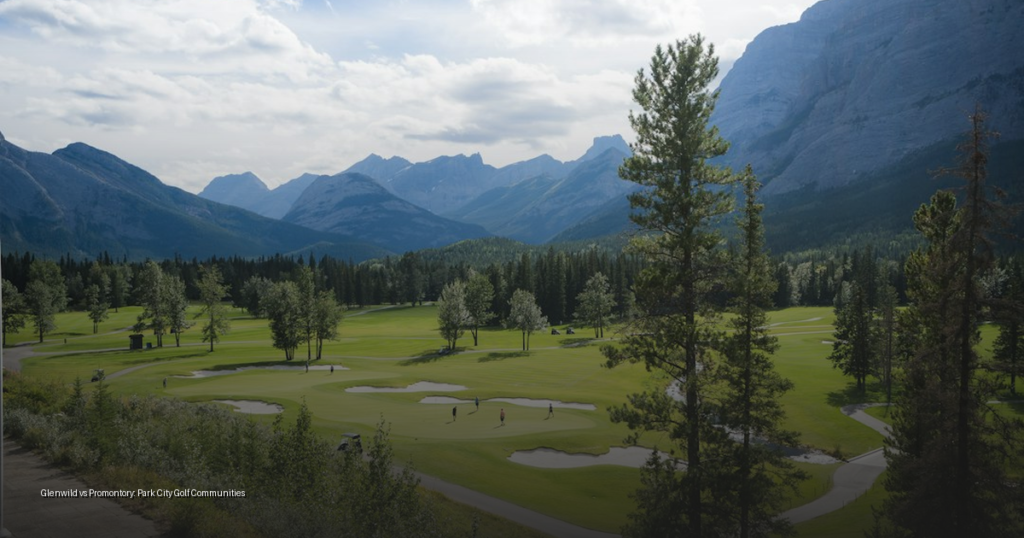
If you want an intimate, single-course community with a nationally ranked layout close to I-80 and the Salt Lake airport, choose Glenwild. If you want a sprawling, amenity-rich club with multiple courses, family programming, and more lot and price variety, choose Promontory. Both sit just minutes from Park City’s historic Main Street, but they solve for two different versions of the mountain-golf lifestyle: Glenwild is boutique and golf-first, while Promontory is a full resort-ranch ecosystem built for extended families. This is the core of the Glenwild vs Promontory decision.
Key takeaways
- Glenwild is a gated, roughly 1,350-acre community built around a single Tom Fazio course that has held a top-in-Utah ranking from Golf Digest for years.
- Promontory spans more than 7,000 acres with two signature courses (Pete Dye and Jack Nicklaus) plus extensive non-golf amenities for all ages.
- Glenwild suits buyers who prioritize golf, privacy, and a shorter airport commute; Promontory suits multigenerational families who want variety and resort-scale clubhouses.
- Both of these Park City golf communities face the same high-altitude realities: short summer golf season, heavy snow load, and construction windows dictated by the Wasatch Back winter.
- Pricing, HOA structure, and club membership terms differ significantly, so verify current dues and initiation costs with a local specialist before you commit.
Park City sits at roughly 7,000 feet in the Wasatch Back, and that elevation shapes everything about golf-community living here, from a compressed playing season to how homes are engineered for snow. The Glenwild vs Promontory comparison below is a practitioner-level look for buyers weighing these two marquee communities.
Location and commute: airport proximity vs ranch seclusion
Glenwild sits just off I-80 on the Jeremy Ranch side of town, which puts it among the closest luxury golf communities to Salt Lake City International Airport, typically around a 30-minute drive in good conditions. For buyers who travel often or keep a primary home elsewhere, that convenience is a daily, tangible benefit, especially in winter when canyon routes matter.
Promontory sits northeast of Park City off Browns Canyon Road, trading airport proximity for sheer scale and seclusion. The drive to Main Street is a bit longer, but you gain big-sky ranch views toward the Uinta foothills and far more room between neighbors. If your ideal weekend is a ranch-style compound rather than a tight fairway community, Promontory’s geography is the point.
The golf itself: one ranked course vs two signature layouts
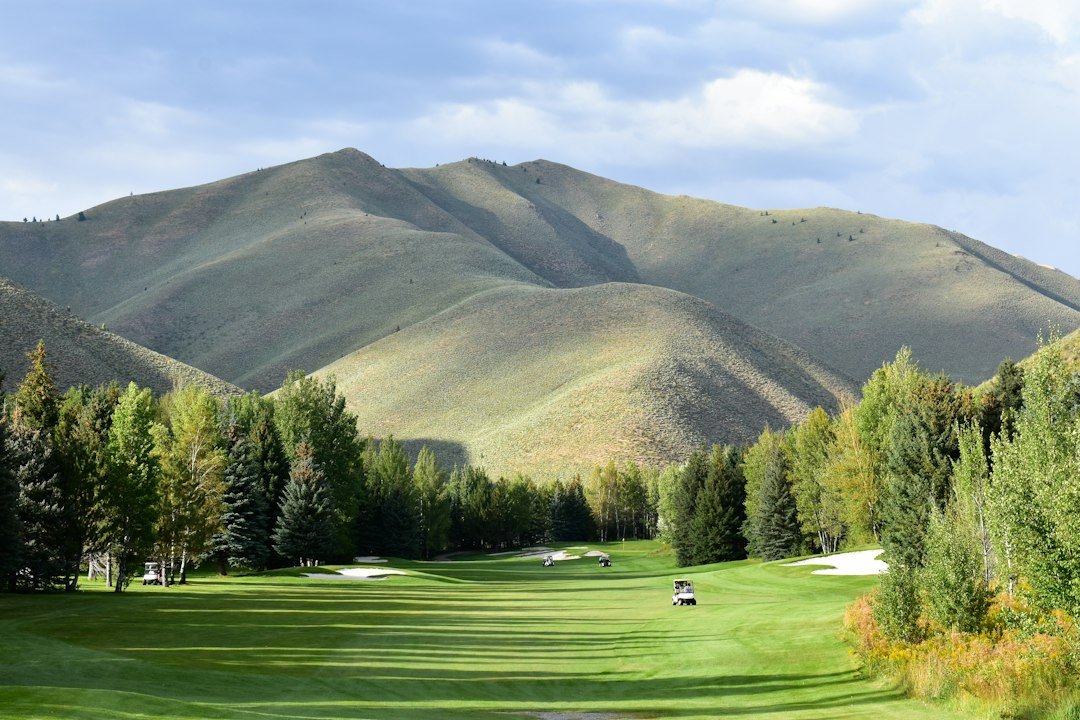
Glenwild is built around a single Tom Fazio design that has repeatedly been named the top course in Utah by Golf Digest. The appeal is focus: one meticulously maintained course, a smaller membership, and tee times that rarely feel crowded. Serious golfers who want a club that revolves entirely around play tend to gravitate here.
Promontory counters with two signature courses, the Pete Dye Canyon Course and the Jack Nicklaus Painted Valley Course, plus a short-game and practice ecosystem that rivals destination resorts. Variety is the draw. You can play two distinct championship layouts without leaving the community, which matters if golf is a shared family pursuit rather than a solo one.
One shared caveat unique to this elevation: the Wasatch Back golf season is short, generally late spring through mid-fall, with snow often closing courses by November. The National Weather Service Salt Lake City office tracks the mountain snowpack that dictates when courses open and close, and buyers relocating from warmer climates should plan around a genuinely seasonal game.
Amenities beyond the fairway
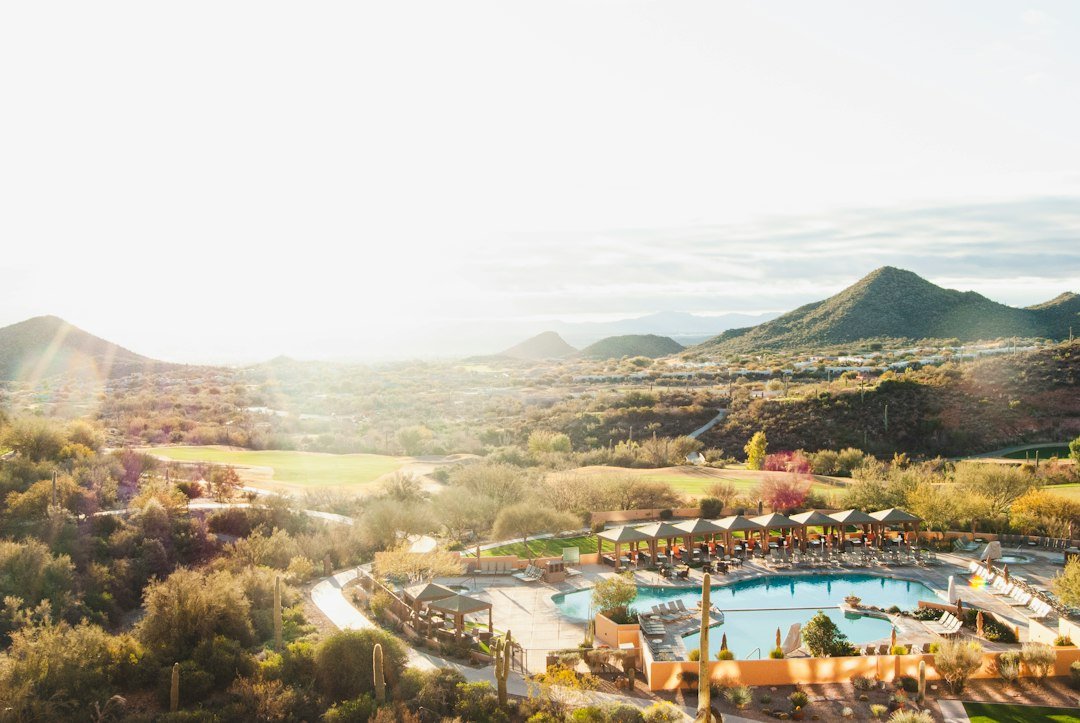
This is where the two communities diverge most. Glenwild keeps its amenity footprint boutique: a well-regarded spa and fitness facility, dining, and a social calendar scaled to a smaller membership. It feels like a private club, not a resort.
Promontory leans into the ranch-club model with multiple clubhouses, a Beach House with pools, an outfitters cabin, equestrian offerings, tubing hills, fishing cabins, kids’ programming, and backcountry activities. For multigenerational buyers, grandparents, parents, and children who all want something to do, Promontory’s breadth is hard to match among Park City golf communities.
Housing stock and building at altitude
Glenwild’s inventory skews toward completed custom estates on established lots, with mountain-contemporary and lodge-style architecture dominating. Because the community is more built-out, buyers often shop finished homes rather than raw land.
Promontory offers a wider spectrum: cabins, townhome-style product, homesites, and large custom estates across many neighborhoods, which translates to a broader price range and more new-construction opportunity. If you want to build from scratch, Promontory typically has more lot selection.
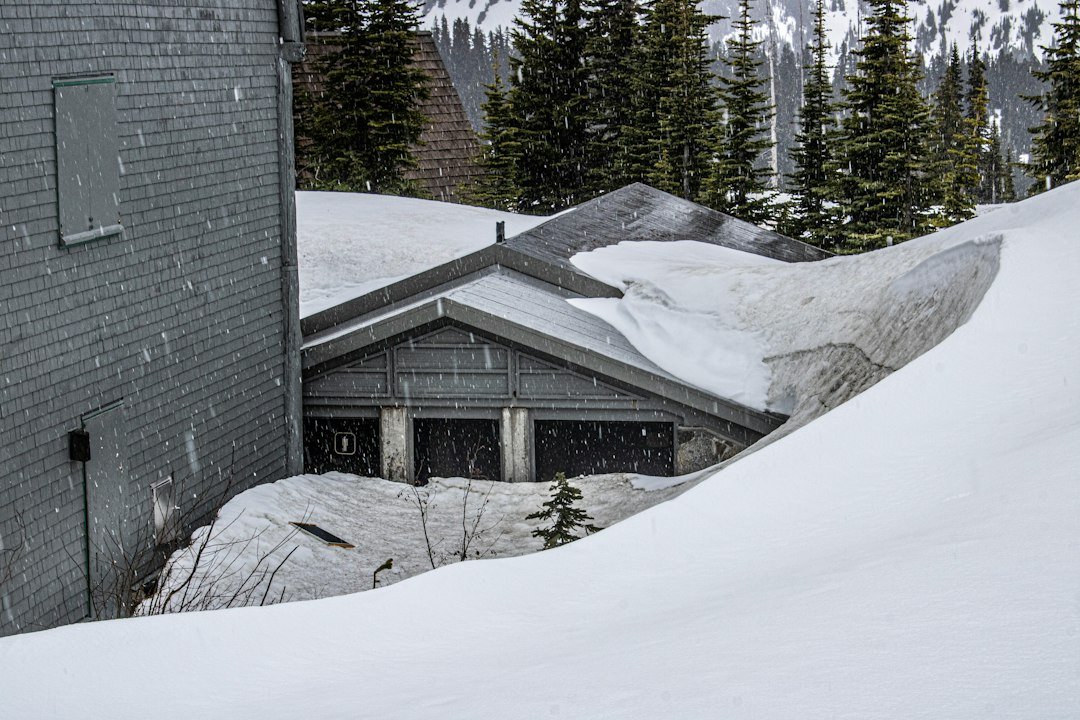
Whichever you choose, building here is a high-altitude discipline. Roofs are engineered for serious snow load, freeze-thaw cycles drive material choices, and the practical construction window is compressed by winter. Snow and ice provisions fall under locally adopted building codes, so confirm current requirements with your builder and a licensed professional rather than assuming a rule of thumb. For context on how the broader market behaves, our overview of why Park City is one of the best luxury real estate markets in the Mountain West is a useful companion read.
Cost, dues, and membership structure
Both communities carry significant club membership components layered on top of real estate pricing, and the structures are not identical. Initiation fees, annual dues, HOA assessments, and whether membership is mandatory or tiered all vary and change over time. Rather than cite numbers that may be stale, we recommend verifying current figures directly, since these materially affect total cost of ownership. For a broader framing of value and holding horizon, see our take on whether luxury homes are a good long-term investment.
Which community fits your lifestyle?
In the Glenwild vs Promontory question, choose Glenwild if golf is your centerpiece, you value a shorter airport commute, and you prefer a tight-knit, boutique club with a single celebrated course. Choose Promontory if you are buying for an extended family, want multiple courses and resort-scale amenities, and are open to building on one of many available homesites.
Neither is objectively better; they serve different buyers. A good next step is to tour both in the same season so you can feel the difference in scale firsthand. When you are ready, reach out to our Park City team to arrange private showings and current membership details, or browse additional guidance on buying luxury real estate in Park City before you decide.